Guides
Booth Renter Licensing Checks: Tennessee and Minnesota
Check booth renter licensing in Tennessee and Minnesota: individual and salon credentials, Minnesota operator restrictions, and insurance evidence.
Booth renter licensing rules start with the person providing the service and the premises where the service happens—not with the chair-rental agreement. This article covers the licensing checks a salon owner or prospective renter should make in Tennessee and Minnesota, including Minnesota's operator restriction and professional liability insurance requirement.
The practical question is whether the proposed stylist can lawfully provide the planned services at that address under that working arrangement. A signed lease, an available station, and a full appointment column do not answer it. Keep those checks separate before putting the chair into service.
Start with the person, the premises, and the arrangement
A salon can have an available station without having a verified person ready to work there. An individually licensed stylist can also have a proposed workspace that has not been checked against the premises license. Treat those as separate questions rather than accepting “the salon is licensed” as an answer to everything.
Start by recording the stylist's actual credential, the licensed business address, and the proposed working arrangement. “Booth renter” describes a business arrangement; it does not identify the professional license held by the person. “Operator,” “cosmetologist,” and “salon manager” should not be treated as interchangeable shorthand.
The useful comparison is about what to verify, not about a supposed Minnesota booth-registration system:
| Licensing check | Tennessee | Minnesota |
|---|---|---|
| Responsible board | Tennessee Board of Cosmetology and Barber Examiners | Minnesota Board of Cosmetologist Examiners |
| Professional credential | Verify the individual's appropriate Tennessee license | Verify the individual's Minnesota credential and its category |
| Premises | Verify the shop license for the working address | Verify the salon license for the working address |
| Rental paperwork | A rental agreement does not replace professional or premises licensing | A rental agreement does not create a booth-registration credential |
| Independent work | Keep licensing and worker-status questions separate | Check the operator restriction as well as worker status |
Use the board's official license-verification resources rather than relying only on a certificate supplied by the stylist or shop. Match the name, license category, status, and address where applicable. If a record does not match the proposed arrangement, resolve the discrepancy before treating the chair as available for appointments.
This is a booking-readiness check, not a substitute for an application. If a new license or a change to an existing license is needed, the relevant board must determine what filing applies.
Tennessee: verify the stylist and the licensed shop
The Tennessee Board of Cosmetology and Barber Examiners regulates cosmetology under Tennessee Code Annotated, Title 62, Chapter 4. Its cosmetology rules are published in Tennessee administrative rules under Chapter 0440. Those are the authorities to consult for the professional credential and shop requirements, rather than a lease template or another salon's practice.
For an ordinary chair rental within a licensed Tennessee shop, check the individual's appropriate professional license and the shop's license. Tennessee does not have a separate booth-renter professional license that substitutes for those credentials. The rental agreement establishes the parties' business terms; it does not authorize cosmetology services.
Match the planned service menu to the individual's license. Do not assume that any credential issued by the same board authorizes every service offered in the building. For a hairdresser's column, the relevant question is whether that person is authorized to perform the services actually being booked.
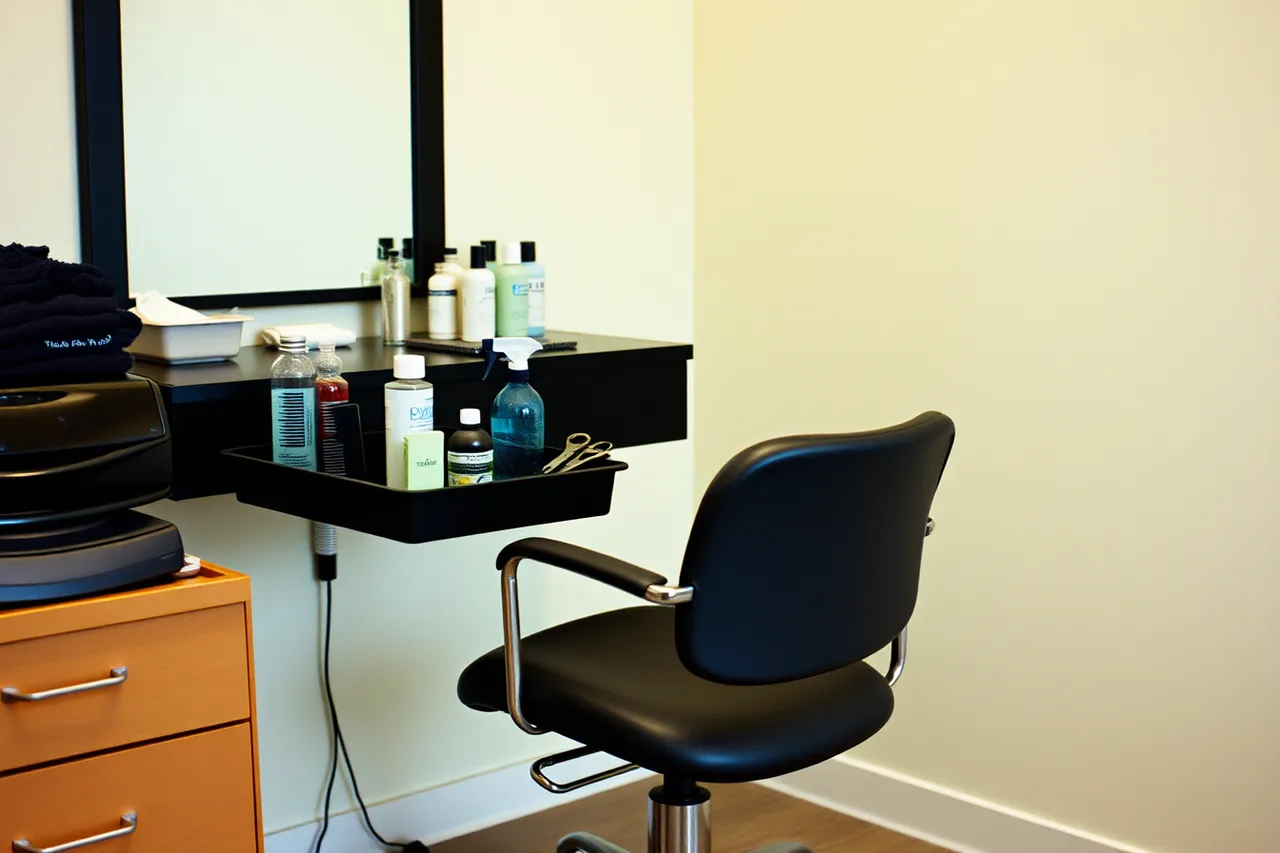
On the premises side, check the licensed shop's name and address against the place where clients will receive services. If the proposal involves a separately operated suite, a new location, or a different business occupying part of an existing property, describe that arrangement to the board. Do not stretch the ordinary chair-rental model to cover a different premises arrangement without checking it.
Keep individual and shop license status in separate fields in the salon's records. The stylist's credential does not establish the shop's status, and the shop's credential does not establish the stylist's qualifications. A single note saying “licenses checked” makes it harder to see which record needs attention later.
Before posting appointments, record who performed each check and what remains unresolved. If the stylist presents an application receipt instead of an active credential, do not treat the receipt as proof that practice is authorized. Ask the board to resolve the status question rather than letting the booking calendar decide it.
Minnesota: licensed practitioners and salons, not registered booths
Minnesota's framework is in Minnesota Statutes, Chapter 155A. The relevant authority is the Minnesota Board of Cosmetologist Examiners. A rented station should not be described as a separately registered booth under that framework.
Section 155A.29 requires compensated cosmetology services to be provided by a licensee in a licensed salon unless another provision of that section applies. It also requires evidence of continued professional liability insurance coverage for a salon license of at least $25,000 for each claim and $50,000 total coverage for each policy year for each operator; see the Minnesota salon license requirements.
That gives the owner two concrete licensing checks before considering the rental terms: the person must have the appropriate credential, and the working location must meet the salon-licensing requirement. A lease naming the station or identifying the salon address does not replace either check. Calling the space a booth does not create a separate registration process.
Minnesota's fee statute lists salon, practitioner, manager, instructor, and school licenses. It does not list a separate booth-renter registration fee. There is therefore no basis for adding a booth-registration certificate, registration renewal, or registration payment to the licensing file described here.
The distinction matters operationally because an invented registration can distract from a real credential problem. A salon could collect a rental agreement and an insurance certificate yet still fail to check whether the individual's license category fits independent work. Start with the board credential, not with the label on the rental folder.
For insurance, document how the salon's coverage satisfies the statutory requirement for each operator. Do not assume that the salon's policy covers everyone merely because it bears the salon's name. Have the insurer or insurance professional confirm the relevant coverage and keep that explanation with the licensing evidence.
Minnesota's operator restriction needs its own check
Minnesota expressly addresses an operator working as an independent contractor. Section 155A.25 lists penalties of $200 for “owner and manager allowing an operator to work as an independent contractor” and $100 for “operator working as an independent contractor”; see the Minnesota operator penalty provisions.
Read the word “operator” carefully. It is not a safe substitute for every licensed person who works behind a chair, and the penalty should not be paraphrased as a blanket statement that every form of independent salon work is prohibited. Minnesota lists practitioner and salon manager credentials separately, so the exact credential matters.
For a proposed rental, identify the license category and ask the Minnesota Board of Cosmetologist Examiners whether it authorizes the proposed independent work. Describe the actual arrangement rather than asking only whether “booth rental is allowed.” A useful inquiry identifies the credential, the licensed salon, the services, and the way the person will work.
Do not assume that federal tax treatment answers this state licensing question. The IRS considers behavioral control, financial control, and the type of relationship when evaluating worker status. A rental agreement or a self-employed label does not settle that analysis on its own.
The publication's Booth rental article addresses the worker-status question. Keep that review alongside the licensing review, not in place of it. Passing one check does not establish that the other has been satisfied.
For the roster, an unresolved license-category question means the proposed independent column is not ready to be treated as confirmed capacity. Resolve the legal arrangement first. Otherwise, the salon may sell appointments against a working model that has not been established as permissible.
Turn the licensing checks into a booking decision
A practical readiness record should let the owner see what was verified, not merely what paperwork was collected. Use the following sequence before opening a renter's appointment column. These are operating checks, not a representation that either board requires a form with this layout.
- Identify the person and services.Record the stylist's name, the credential presented, and the services the salon plans to book. Compare the service menu with the authority of that credential rather than accepting a general statement that the person is licensed.
- Verify current license status.Use the responsible board's official verification resources and retain a record of the result. If the status is unclear, obtain clarification before authorizing services.
- Verify the working premises.Match the shop or salon licensing record to the actual location. Escalate address, business-name, or premises-arrangement discrepancies instead of treating them as clerical details.
- Check the proposed independent arrangement.In Minnesota, specifically resolve whether the individual's license category permits the proposed work in light of the operator restriction. In either state, review worker classification separately from professional licensing.
- Confirm applicable insurance evidence.For Minnesota, address the salon's statutory professional liability requirement for each operator. Separately identify any insurance obligations created by the rental contract.
- Approve the appointment column only after unresolved items are closed.Record who made the decision and what evidence supported it. Do not let a planned start date stand in for proof of authorization.
Keep the outcome readable for the person managing bookings. “Ready,” “awaiting board clarification,” and “not approved for booking” are more useful than a folder full of unexplained documents. These are internal operating labels, not license categories.
If a check fails, identify the specific issue rather than removing the entire person from consideration without explanation. The missing item might concern the individual credential, the location, the work arrangement, or insurance evidence. Each calls for a different response, and the rental agreement cannot repair all of them.
Avoid accepting a promise that paperwork will be completed after the first clients arrive. That turns a licensing uncertainty into an appointment problem. It also leaves the front desk explaining a cancellation that should have been prevented before the column opened.
Recheck when the arrangement changes
A successful initial check is not a permanent answer. License status, working addresses, insurance coverage, and business arrangements can change. Keep the licensing review connected to changes that affect the work, rather than relying on the original rental file indefinitely.
A move from Tennessee to Minnesota, or the reverse, is a reason to check authorization in the destination state before booking services there. An existing out-of-state credential may be relevant to an application, but it does not by itself establish authority to practice at the new address. Use the destination board's current instructions for the person's actual credential and circumstances.
Do not build a universal transfer checklist around a presumed board-to-board verification form. The necessary application and supporting material depend on the receiving board's requirements. If verification of the existing license is requested, follow the receiving board's specified process rather than assuming that a photocopy or a particular transmission method will suffice.
A move within a state also deserves a premises check. The fact that a stylist was authorized to work at the previous salon does not establish the licensing status of the next location. In Minnesota, revisit the insurance evidence and the proposed independent arrangement as well.
For an existing renter, pay attention to the actual expiration and status information attached to the relevant licenses. Do not invent a Minnesota booth-registration renewal date or combine unrelated credentials into a single renewal reminder. When a credential's status becomes uncertain, confirm authorization before continuing to offer the affected services.
Keep a licensing file that explains the decision
The useful file is smaller than a general business-compliance file, but it should tell a clear story. It should identify the person, the premises, the proposed arrangement, and the evidence supporting the decision to allow bookings. A document belongs there because it answers a licensing question, not simply because it arrived with the lease.
A workable file can include:
- The individual's credential details and the result of the official status check.
- The shop or salon licensing details for the working location.
- Board correspondence resolving a license-category or premises question.
- The rental agreement, clearly identified as contractual paperwork rather than a professional credential.
- Insurance evidence and any clarification needed to establish the applicable coverage.
- The salon's booking-readiness decision and any unresolved restrictions.
For Minnesota, do not add a supposed booth-registration form, certificate, or renewal notice to that list. The meaningful records concern the licensed person, licensed salon, operator restriction, and insurance requirement. A folder labeled “registered booth” would obscure that structure rather than document it.
Keep insurance documents in their proper role, too. An insurance certificate is not a cosmetology license, and possession of a license does not prove that a particular claim would be covered. Questions about insured persons, services, exclusions, or contractual insurance obligations should be resolved through the policy and the insurer, not guessed from the certificate's heading.
The wider Hair salon compliance checklist belongs alongside this file for other salon obligations. It should not replace the narrower decision about who can work at a particular chair under a particular arrangement. Licensing readiness is one part of operating the salon, not a claim that every other obligation has been satisfied.
The final standard is straightforward: know which person is authorized, which premises are licensed, and whether the proposed work fits the credential. In Tennessee, keep the individual and shop checks distinct. In Minnesota, add explicit attention to the operator restriction and statutory insurance evidence—not a booth registration that does not exist.