Guides
Salon chemical safety OSHA rules and EPA waste rules
Salon chemical safety OSHA rules cover labels, safety data sheets, PPE, and EPA disinfectant and hazardous waste duties for US salon workers.
What to take away
- OSHA's Hazard Communication standard, 1910.1200, covers every product in your dispensary that carries a hazard warning, from lightener to acetone.
- Four duties hold it togetherinventory the chemicals, label every container including decants, keep safety data sheets reachable during a shift, and train before a worker touches the product.
- EPA rules reach the salon twice, through disinfectants registered as pesticides and through disposal of solvent, peroxide and monomer waste.
- Section 8 of a safety data sheet tells you which glove to buy. Ventilation comes before gloves.
- Roughly half the states run their own OSHA program, so the enforcing office changes while the core duties do not.
- The laws behind those rules are OSHA's Hazard Communication standard, FIFRA for antimicrobial disinfectants, RCRA for hazardous waste, and the Clean Water Act for sewer discharge.
- Keratin and smoothing services bring in OSHA's formaldehyde standard, 1910.1048, and its own training and monitoring duties.
Why two agencies cover one bottle of color
OSHA protects the stylist mixing the color. The EPA governs what is in the bottle and where the leftovers go.
A salon disinfectant that claims to kill germs on combs is registered by the EPA as a pesticide. The same bottle obliges you to train anyone who pours, sprays or wipes with it.
That split confuses owners, because one container carries an EPA registration number on the front and a hazard warning on the back.
Federal OSHA covers most private salons, whether you employ two people or twelve. Some recordkeeping duties scale with headcount.
OSHA recordkeeping rules, 29 CFR 1904, use Forms 300, 300A and 301 for covered employers. Some small salons are partially exempt, but hazard communication, sheets and training still apply.
Booth renters complicate the picture. A renter who sets their own hours, prices and clients may sit outside your OSHA duties. A renter you control does not.
The IRS weighs control, not labels, when it compares Form 1099-K income against booth rent. State labor departments ask similar questions.
Assume the products in your back room are covered, then sort out who answers for each worker.
Local health department sanitation inspections are a separate track. They check cleanliness and licensing, and they do not replace hazard communication training.
If you are building the paperwork from nothing, a Hair salon compliance checklist shows which duties sit with the owner and which sit with each chair.
OSHA Hazard Communication standard in a working salon
The Hazard Communication standard turns chemical labels and safety data sheets into a workplace program.
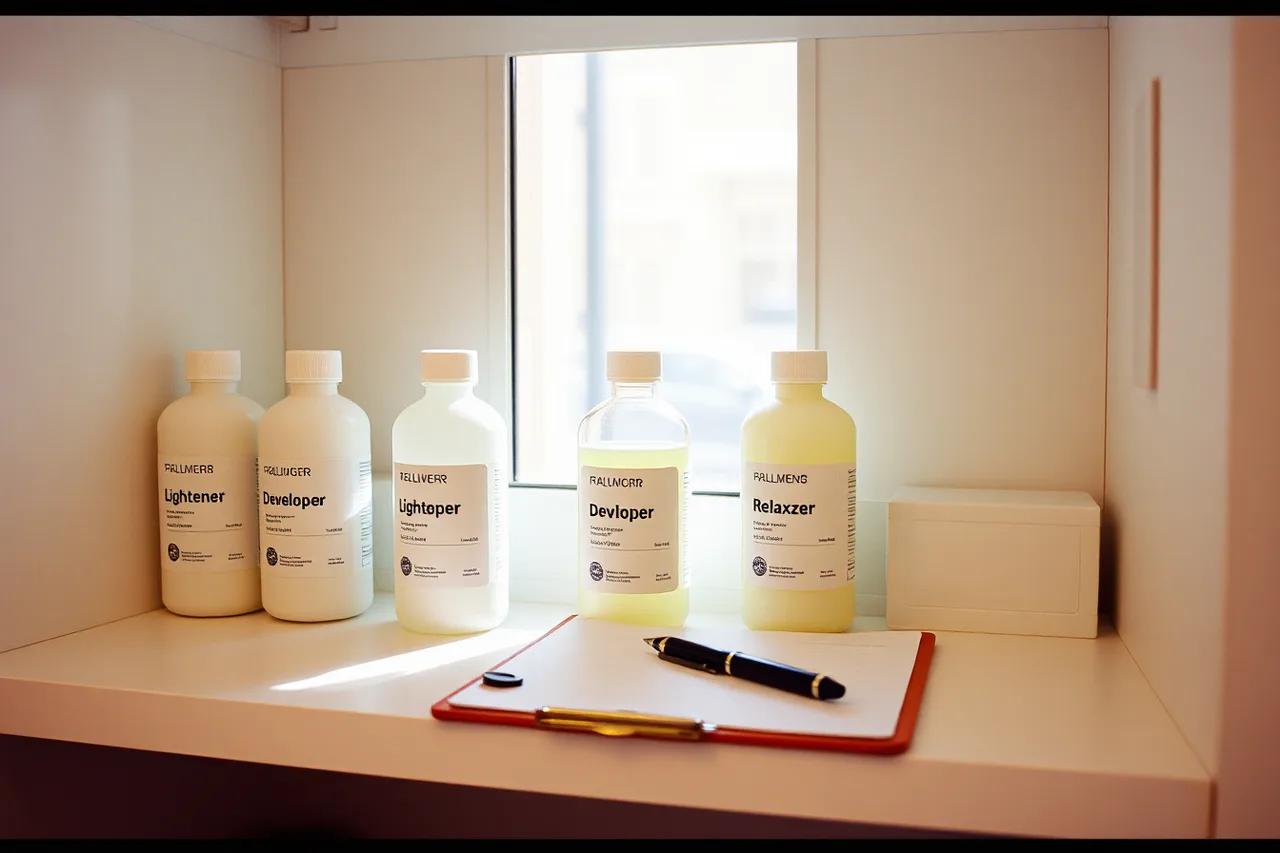
Four duties carry it. Identify the hazards, label the containers, keep the sheets, train every exposed worker.
Start with an inventory. Walk the dispensary, the color bar, the nail table and the back room, and write down every product with a hazard warning.
That list runs longer than owners expect. Lightener, developer, relaxer, keratin products and acetone all qualify. Shampoo and most retail styling products generally do not, unless the label says otherwise.
The written program can be one page. It names who runs it, where the sheets live, how workers get trained, and what happens when a new product arrives.
Labels are where salons slip. Keep the manufacturer's label intact on the original container, and label any bottle you decant into.
A workplace label needs the product name and the hazards. A blank spray bottle of clear liquid is a violation.
Train before a worker handles the product, and again when a new hazard enters the salon. Training has to be in a language the worker understands.
Cover the health effects, the signs of overexposure, safe handling, and what to do in a spill or splash. Record who attended and when.
The OSHA Hazard Communication overview is the plain-language companion to the standard. Read it once a year.
What the written program contains
- A named person responsible for the program.
- A current chemical inventory, reviewed at least yearly.
- The location of safety data sheets, in print or on a device workers can reach.
- A training schedule for new hires and for new products.
- A spill and exposure response procedure.
Where salons get cited
Most salon violations are boring. Missing labels, no training records, sheets locked in an office nobody can open.
An inspector does not need to watch a color service. A walk through the dispensary usually tells the story.
Safety data sheets: where they live and who reads them
A safety data sheet is the manufacturer's sixteen-section document on a hazardous product. It covers identification, hazards, first aid, handling, storage and disposal.
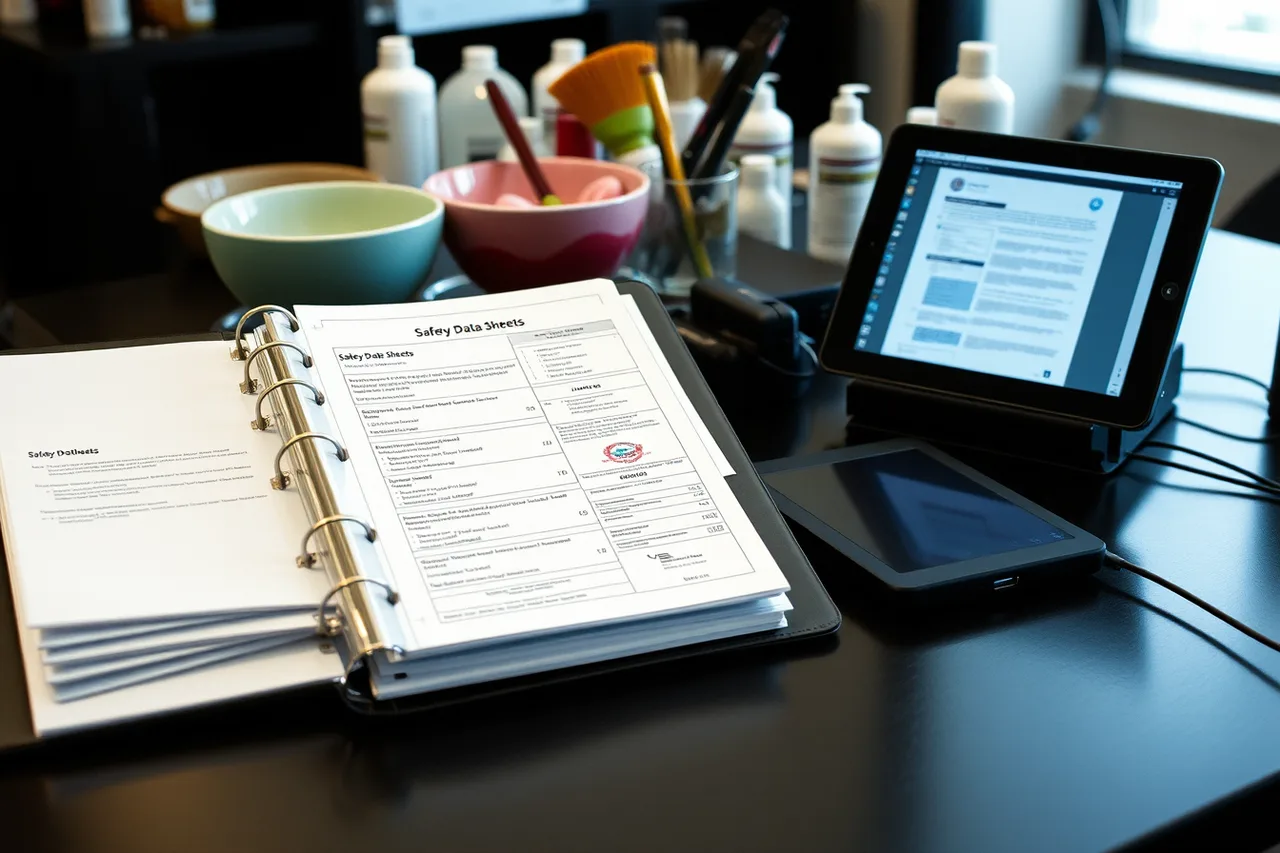
Your duty is access, not memorization. Any worker must reach a sheet for any hazardous product they use, during their shift.
A paper binder works. So does a charged tablet at the color bar, if the worker knows how to search it.
Sheets arrive with the first shipment or on request from the supplier. A distributor who will not send one is a reason to change suppliers.
Read four sections first. Section 2 gives hazards, Section 4 first aid, Section 7 safe handling and storage, Section 8 exposure controls and PPE.
Section 8 tells you which gloves to buy. Nitrile, neoprene and latex behave differently against different chemicals.
Manufacturers revise sheets. When a reformulated product arrives, replace the old sheet and retrain if the hazards changed.
New hires should read the sheets for the products they will actually touch in week one. That belongs in your hair salon license requirements review.
Do not rely on a manufacturer website alone if the salon has no reliable device. Inspectors expect access in the workplace, not a promise to look it up later.
Common sheet problems
| Problem | Why it fails | Fix |
|---|---|---|
| Binder from 2019 | Hazards and first aid may have changed | Request current sheets yearly |
| Sheets on a locked laptop | Workers cannot reach them mid-shift | Move to a shared tablet or print copies |
| Only the newest products | Older products still in use | Inventory first, then collect sheets |
| No sheet for decanted products | The original container is gone | Keep the original label and sheet together |
Personal protective equipment for color, relaxer and nail work
OSHA's personal protective equipment overview frames the basic rule: use PPE when a hazard cannot be engineered away.
The PPE requirements come from 29 CFR 1910.132 for general PPE, 1910.133 for eye and face protection, and 1910.138 for hand protection. When a respirator is required, 29 CFR 1910.134 adds fit testing, medical evaluation and training.
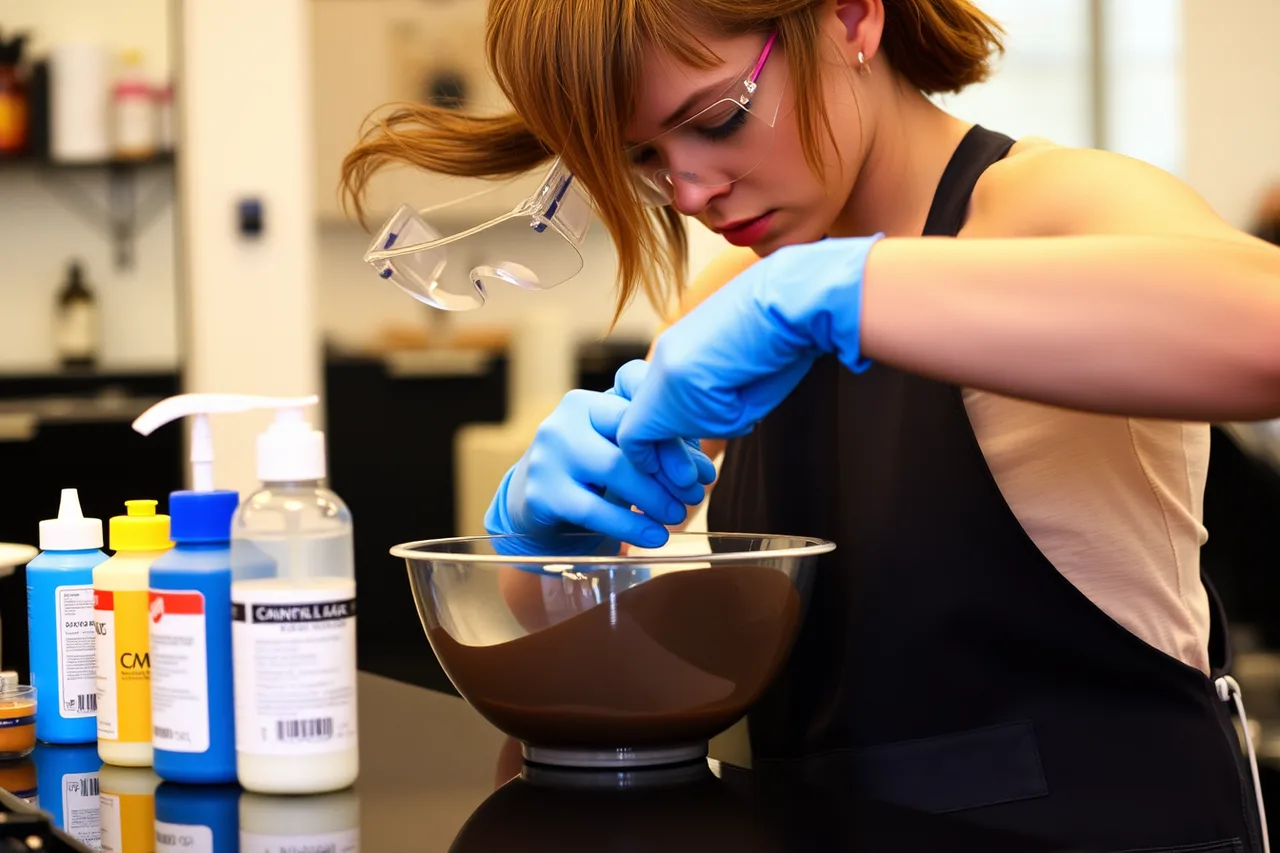
Ventilation comes first. Local exhaust at the nail table and steady general airflow cut vapor exposure before gloves enter the picture.
Gloves are the workhorse. Nitrile suits most color and disinfectant tasks. Thicker reusable gloves suit long relaxer or monomer sessions.
Latex is a poor default. Allergy rates make it a problem for workers and clients alike.
Eye protection matters when you mix powder lightener, pour developer or work with acetone. Safety glasses with side shields are cheap and adequate.
Aprons catch splashes during relaxer and smoothing services. Disposable or washable, the point is a barrier.
Nail work adds dust and vapor. Filing acrylic may call for a dust mask or respirator, and the monomer sheet will say so.
Keratin and smoothing services can expose workers to formaldehyde. OSHA's formaldehyde standard, 29 CFR 1910.1048, sets exposure limits and requires training, monitoring and medical surveillance when the exposure triggers it.
A respirator is more than a handout. Fit, medical evaluation and training apply whenever the hazard requires one.
Hair dryers and flat irons are not chemical hazards, but burns are common. Train new staff on tool handling beside chemical safety.
Salon PPE by task
- Color mixingnitrile gloves, eye protection, apron
- Bleach and lightenergloves, eye protection, dust control when mixing powder
- Relaxergloves, apron, eye protection, ventilation
- Keratin and smoothinggloves, ventilation, sheet-checked respiratory guidance
- Acrylic and gel nailsgloves, dust control, local exhaust
- Disinfectant mixinggloves, eye protection, never a food container
- Waste handlinggloves, closed containers, no bare-hand sorting
PPE only works if it fits and gets replaced. A torn glove is decoration. Keep sizes in stock and let workers take what they need.
EPA disinfectant and waste rules that reach the salon
Disinfectants for combs, shears, clippers and surfaces are regulated as pesticides because they claim to kill germs. The EPA reviews the product and assigns a registration number.
The statute behind that registration is FIFRA, the Federal Insecticide, Fungicide, and Rodenticide Act. It makes the EPA-registered label the legal directions for use.
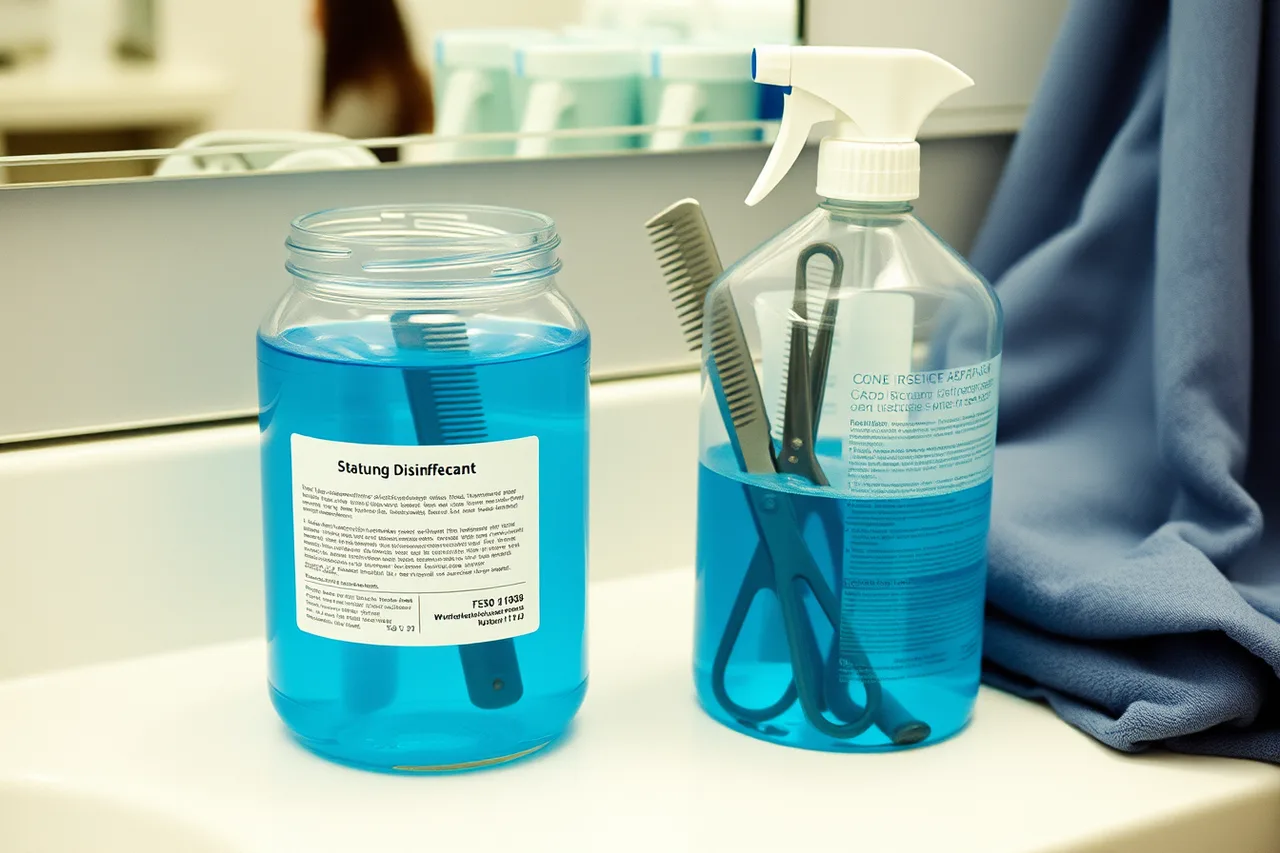
The label is the law. Dilution ratios, contact times and reuse rules on that label are the conditions of legal use.
If the label says ten minutes of contact, a thirty-second dip does not count. If it says do not reuse, do not top up the jar.
The EPA's chemicals, pesticides and toxics topics page explains how these product categories are regulated, antimicrobial pesticides included.
Waste is the second half. Salon waste includes several items:
EPA disinfectant and waste rules
- used relaxer
- leftover color
- developer
- acetone
- monomer liquid
- aerosol cans
- contaminated towels
The federal hazardous waste law is RCRA, the Resource Conservation and Recovery Act. It sorts generators into very small quantity, small quantity and large quantity categories based on the amount of hazardous waste produced each month.
Many of these are not safe in the ordinary trash or down the drain. Solvents, monomers and strong oxidizers can react, ignite or contaminate water.
Your local rules decide the details. Some states and cities treat salon chemical waste as hazardous waste; others route small quantities differently.
The EPA's land, waste and cleanup topics page is the starting point for the framework that applies to your address.
Liquid waste that goes down the drain can fall under the Clean Water Act and your local pretreatment program. The publicly owned treatment works or local sewer authority sets the discharge limits. Your state environmental agency or local sewer authority applies these rules locally. Examples include California's Department of Toxic Substances Control, Washington's Department of Ecology, and the Texas Commission on Environmental Quality.
Keep waste streams separate. Never mix unlike chemicals, keep containers closed and labeled, and store them away from heat.
If you are a hazardous waste generator, RCRA also requires a manifest when waste leaves the salon. The manifest tracks the shipment from your back room to the disposal facility.
Acetone and monomer should not go down the sink. Aerosol cans go to a facility that accepts them, not the curb, in many areas.
Color and bleach waste is usually managed per label and local sewer rules. Check before you dump, because the answer changes by city.
Your state board of cosmetology and local health department also set sanitation rules for tools. Those overlap with EPA labeling without being the same thing.
Choosing lower-risk products before PPE has to carry the load
The EPA Safer Choice program labels products whose ingredients meet the agency's criteria for human health and environmental effects.
For a salon, the label is a shortcut. It does not replace a safety data sheet, but it narrows the field when two products do the same job.
Safer Choice products exist in cleaners, degreasers and some personal care lines. Availability in professional salon sizes varies.
Use it as a purchasing filter, not a guarantee. A Safer Choice cleaner still needs a sheet, a label and training if it carries hazards.
Lower-risk choices cut exposure before PPE has to carry it. That is cheaper than buying better gloves every month.
Ask for the sheet before you buy. A distributor who cannot produce one tells you something about the whole product line.
Buy the smallest container that matches your volume. A gallon of developer that sits for two years is a storage hazard.
Ventilation upgrades and closed mixing systems often cut exposure more than switching brands. Consider both.
Document what you chose and why. A short note on product selection shows a real program if an inspector or insurer asks.
A licensing and compliance guide for a hair salon helps you line up product choices with the rules your state already enforces.
State Plans: when a state runs its own OSHA program
Federal OSHA covers private employers in most states, but roughly half run their own approved program, called a State Plan.
State Plans must be at least as effective as federal OSHA. Many adopt the same Hazard Communication standard under the same 1910.1200 numbering.
California, Washington, Colorado and New York run State Plans. Texas, Florida and Georgia largely fall under federal OSHA for private salons.
Public sector workers, including some salon staff in schools or institutions, may be covered only by a State Plan.
What changes is the enforcing office, the inspection process, and sometimes extra state rules on top of federal ones.
California employers deal with state standards and a state board that also inspects sanitation. Washington has its own chemical rules for some workplaces.
What does not change is the core: inventory, labels, sheets, training and PPE apply either way.
Operate in more than one state and you build to the stricter standard, then use it everywhere.
Check your state department of labor for wage and hour rules at the same time. Chemical and pay compliance often surface in the same complaint.
State Plan examples
| State | Private salon enforcement | Notes |
|---|---|---|
| California | State Plan | State standards plus board sanitation rules |
| Washington | State Plan | Own chemical and safety rules |
| Colorado | State Plan | Federal-style hazard communication |
| New York | State Plan for public workers | Private salons largely federal |
| Texas | Federal OSHA | State board handles licensing |
| Florida | Federal OSHA | County health departments inspect |
Compliance habits that keep a salon inspection-ready
Inspection readiness is a routine, not a project. The salons that pass are the ones where the binder, the labels and the training are current on an ordinary Tuesday.
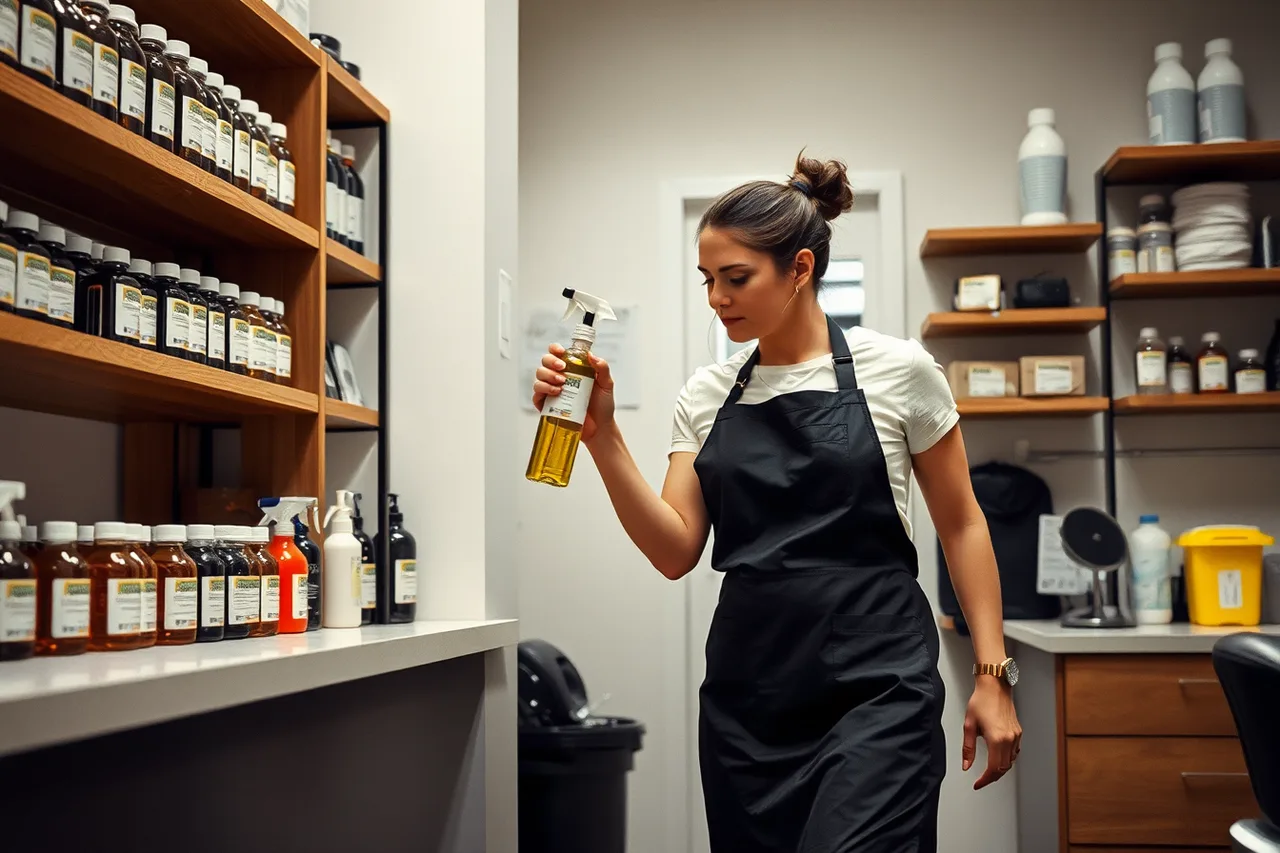
Set a monthly walk-through. Check labels on every decanted bottle, confirm the sheet binder matches the shelf, and hunt for unlabeled spray bottles.
Onboard every new hire the same way. Chemical training in week one, signed and dated, before they touch a relaxer or a nail primer.
Keep a simple log: product name, sheet date, training date, who attended. One page per product is enough.
Review the inventory when seasons change. Summer heat and winter dryness change how you store aerosols and oxidizers.
Write your spill steps down and post them near the dispensary. A posted procedure beats memory under pressure.
Separate waste where it is generated. A labeled bin at the nail table works better than a sorting session at closing.
Revisit your hair salon workflow and operations when you add a service line, because new services bring new chemicals and new waste.
Train booth renters on salon-wide rules even when they are independent. They share your ventilation, your waste bins and your reputation.
Keep records for at least the period your state requires, and longer if a claim is possible. Training records are the first thing requested after an exposure.
When a supplier reformulates, replace the sheet, relabel the shelf and retrain if hazards changed. That one habit prevents most citation risk.
What chemical safety means for your stylist roster
Chemical safety is a roster problem before it is a paperwork problem. Training has to happen before a stylist's first chemical service, not after a busy Saturday. Block that time into the schedule. New hires need product-specific sheet review and a walk-through of labels, storage and spill steps before they take clients. Booth renters change who is on the roster but not the shared risks. Independent stylists still use your ventilation, waste bins and dispensary, so train them on salon-wide chemical rules. The money side is mostly time, gloves, eye protection and waste handling. The hidden cost is a rushed training that leads to a splash, a citation or a lost worker. Review the roster when you add keratin, smoothing or nail services. New services bring new sheets, new PPE and new waste streams, and the person doing the service needs the training first.
Common questions
Does OSHA apply to a small salon with three stylists?
Yes. Federal OSHA covers private employers regardless of size, though some recordkeeping duties depend on employee counts. Hazard communication, sheets and training apply to any salon holding hazardous products.
Can I keep safety data sheets on my phone?
Only if workers can actually reach them during a shift. A shared tablet or a printed binder at the color bar is more reliable than one owner's phone.
Are salon disinfectants regulated by the EPA?
Yes, when they claim to kill germs on surfaces or tools. The registration number and the label directions, including dilution and contact time, are enforceable conditions of use.
Can I pour leftover color or acetone down the drain?
Check the label and your local sewer or waste authority first. Solvents and monomers are commonly restricted, and many areas require a separate waste route.