Guides
Hair salon equipment reviewed: what holds up and what does not
A review of hair salon equipment naming the brands that hold up in daily salon use and the ones that fail on parts, service, clippers and wear.
What to take away
- Hair salon equipment reviewed herewhat holds up and what does not comes down to parts support, local service and wear parts.
- Takara Belmont and Collins hold up in daily salon use; both publish parts support and have dealer service networks.
- Kaemark and Belvedere are the value tierfine in a low-volume room, thin on parts and warranty response.
- Minerva Beauty and DIR Salon Furniture sell on price and lead time, not on a service network.
- One brand is not a brandchairs, shampoo units and dryers come from different makers, so judge each item.
- Ask any supplier for years of parts support in writing before you order.
What fails on hair salon equipment
Most equipment does not fail at the frame. It fails at the hydraulic pump, the upholstery seam, the dryer element, and the footrest bracket.
Those parts decide whether a chair is an asset or a consumable. A pump that leaks after three years turns a chair into a repair bill with a chair attached.
The other failure is service distance. A brand nobody within driving distance can fix is a brand you cannot fix. A failed dryer element can sideline a color client for the day.
Brand by brand: parts, service and price
The durability notes below rest on dealer parts lists, service records from multi-chair salons and published warranty terms, not on the makers' brochures. Price bands are typical market ranges, not quotes.
Brand by brand
| Brand | Tier | Typical price band | Parts support | Service network |
|---|---|---|---|---|
| Takara Belmont | Premium | Styling chairs $1,500 to $3,000; shampoo units $1,200 to $2,500 | Stated in writing, deep catalog | Dealer network, the deepest in the category |
| Collins | Mid to premium | Chairs $800 to $2,000; dryers $400 to $1,200 | Stated and honored | Domestic parts path, dealer service |
| Kaemark | Value | Chairs $300 to $800 | Thinner, warranty response slower | Limited |
| Belvedere | Mid, imported | Chairs $700 to $1,800 | Imported, long lead times | Thin |
| Minerva Beauty | Low price, direct | Chairs $200 to $600; shampoo units $300 to $900 | Thin | Thin, warranty is the only support |
| DIR Salon Furniture | Low price, direct | Stations $300 to $900; carts $150 to $500 | Thin | Thin |
Takara Belmont (holds up). Japanese manufacturer, the default in high-volume salons. Its Legend and Elegance styling chairs and Yume shampoo units are built for all-day use. Hydraulic pumps take years of up and down. Dealer and parts networks are the deepest in the category.
Premium pricing: styling chairs typically run $1,500 to $3,000, and shampoo units $1,200 to $2,500, depending on model and upholstery. Worth it in a chair that runs eight hours a day.
Collins (holds up). American maker of chairs, dryers and shampoo units, long established in the trade. Its dryers are the workhorses of busy color rooms. Parts support is stated and honored. Mid to premium pricing: chairs typically $800 to $2,000; dryers $400 to $1,200, depending on model and finish. The right pick when you want a domestic parts path.
Kaemark (holds up in low volume, weaker on parts). Value tier with a wide catalog: chairs, stations, shampoo bowls, dryers. Fine in a two-chair studio running light volume. Parts availability is thinner than the top tier and warranty response is slower, so buy it knowing you may wait. Typical chair prices: $300 to $800, depending on upholstery and frame.
Belvedere (comfortable, weaker on parts lead time). Italian styling chairs with strong finishes and good ergonomics. Comfortable for long shifts. The trade-off is imported parts and lead times, so keep a spare chair if you run a full row. Typical price: $700 to $1,800 per chair, depending on finish and import shipping.
Minerva Beauty (low price, thin service). Direct-to-salon seller covering the whole fit-out at low prices. Good for a new owner watching cash. The service network is thin, so treat the warranty as your only support. Typical styling chair: $200 to $600; shampoo unit: $300 to $900, depending on model and freight.
DIR Salon Furniture (low price, quick shipping, thin service). Similar position: broad catalog, competitive pricing, quick shipping. Buy it for stations and storage where a failure is inconvenient rather than a lost day. Typical station: $300 to $900; storage cart: $150 to $500, depending on materials and shipping.
Clippers, shears and small tools
Small tools wear faster than chairs and cost less to keep. A clipper is a motor and a blade, and the blade is the wear part. Expect blade sets, blade drives, levers and cords to go before the motor.
Blade formats for Wahl, Andis and Oster clippers are long established, so replacement blades, drives and levers stay available through beauty supply distributors. BaBylissPRO and JRL cordless models add a battery to the wear list. Professional clippers typically run $100 to $250, depending on motor and blade system.
Shears are a different market. Kasho, Mizutani and Kai sell on steel and edge geometry. The wear parts are the tension screw, the pivot washers and the edge itself. An edge needs sharpening by a shear specialist, not a bench grinder. Professional shears typically run $100 to $500, depending on steel and length.
Blades and shears must be cleaned and disinfected between clients, so removable parts matter. Judge small tools as you judge chairs: who stocks the wear parts, and who can service them nearby.
What decides the purchase
| Criterion | What to confirm | Why it decides the purchase |
|---|---|---|
| Brand tier and price band | Takara Belmont or Collins for daily use; Kaemark, Minerva Beauty or DIR for low volume | Sets the parts and service you can expect |
| Parts support | Years stated in writing | Decides whether a repair is possible |
| Local service | Named technicians near you | A brand nobody can fix is unfixable |
| Lead time | Item and common part | A slipped delivery moves your opening |
| Ergonomics | Tested by the stylist who will use it | Time is the hidden cost of ownership |
| Cleanable surfaces | Meets your board's standards | A surface that cannot be disinfected is unusable |
| Warranty | What is covered and what voids it | Most warranties exclude your failure |
Evidence to request from a supplier
Evidence to request
- How long will parts be available for this model, in writing?
- Who services this locally, with contact details?
- What is the lead time for the item, and for a common part?
- What does the warranty cover, and what voids it?
- Which salons near me run this model?
- What are the cleaning instructions for these surfaces?
Answers that end the conversation
- Parts availability cannot be stated, or the model is being discontinued and nobody said so.
- No local service exists and the supplier suggests shipping it back.
- Cleaning guidance that conflicts with your board's requirements, or none at all.
Sanitation standards are set by your state board of cosmetology and vary. Equipment that cannot meet them is not a candidate.
Matching equipment to the roster
Chair count is not capacity. Capacity is booked service hours divided by available chair hours, and that number depends on your service duration bands.
Match chairs to booked hours
Does the chair run eight hours a day?
Buy the top tier
Spend on a second shampoo unit
A chair that runs eight hours a day needs the top tier. A chair that runs two hours a day does not, and the money is better spent on a second shampoo unit.
Double-booking during processing time only works if the equipment supports it: a dryer per color client, a bowl per stylist. Buy for the roster you run, not the one in the catalog.
How stylists progress through levels and price tiers changes how many chairs you need. The hiring and training guide covers that progression.
Buying new against buying used
Used top-tier equipment often beats new value-tier equipment. A five-year-old Takara Belmont with a service history is a better asset than a new chair with no parts path.
Used top tier vs new value tier
Used top-tier
- Example
- Five-year-old Takara Belmont
- Service history
- Known
- Parts path
- Exists
- Verdict
- Better asset
New value-tier
- Example
- New chair
- Service history
- None yet
- Parts path
- None
- Verdict
- Consumable
The arithmetic is in the new against used equipment cost guide. Work it in your own figures: purchase price, expected service life, parts cost per year, and downtime per repair.
Fitting the equipment to the room
Fit matters more than finish. Measure the working envelope first, then buy, not the other way around.
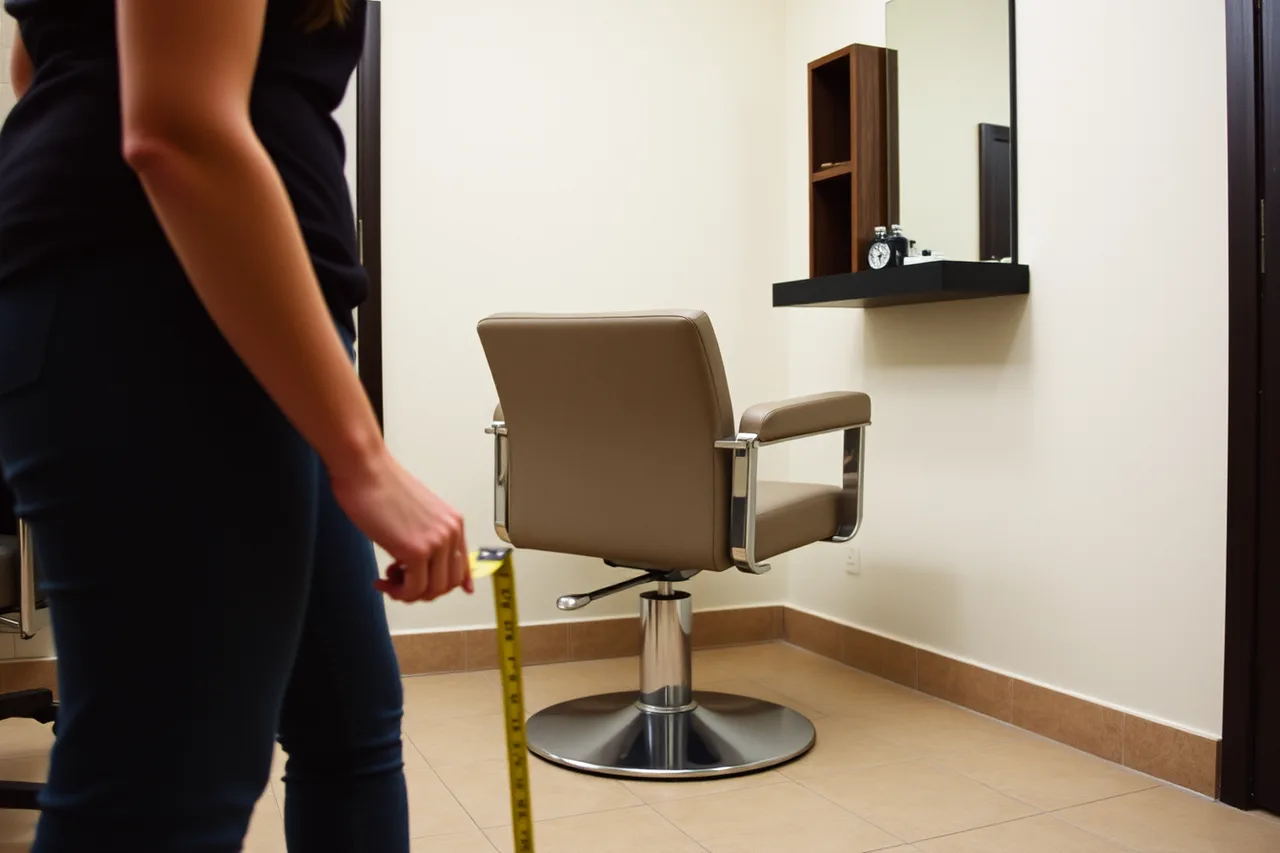
The equipment and setup guide covers zone layout and clearances. The new owner checklist covers the order to buy things in.
Leave service access behind the shampoo unit. Check power, drainage and airflow above a dryer bank. A dryer row with no airflow fails early, and a chair tight to a wall cannot recline. Delivery access matters too: a styling chair that will not fit through the door is a problem you own.
Who may operate which equipment follows from the levels in the hiring guide, and the standards the equipment must meet belong in the register described in the licensing and compliance guide.
Workplace safety obligations apply regardless of brand; see the Occupational Safety and Health Administration guidance on safety management and the Food and Drug Administration fact sheet for salon professionals.
Common questions
Which brand should a new salon buy?
Takara Belmont if the budget allows and the chair will run all day. Kaemark or Minerva Beauty if cash is tight and volume is low. Match the tier to the hours, not to the showroom.
Is used equipment worth it?
Often yes, if it is a top-tier brand with a stated parts path. A used Takara Belmont or Collins chair with a service history beats a new value-tier chair. Check the pump and the upholstery seams first.
How many chairs do I need?
Work it from booked service hours divided by available chair hours, using your own service duration bands. Buy for the roster you actually run. A chair that sits empty is a chair you are paying for.
What voids a warranty?
Usually shipping damage you did not document, unauthorized repairs, and cleaning agents the maker did not approve. Read the terms before you sign, and keep the replies from your supplier in writing.