Guides
Hair salon opening equipment: the item list, zones and buying order
An opening equipment list for a hair salon: wash units, stations, processing seats, dispensary and storage, with typical prices, clearances, zones and buying order.
What to take away
This is the equipment a hair salon cannot open without for 2027: a short list, with the makers and typical prices named below.
- The opening list is shortwash unit, one fitted station per chair, processing seating, dispensary, storage, reception.
- Wash units are the constraint. They need drainage and hot water at volume, so the count is fixed the day the layout is signed.
- Processing seating is a scheduled resource. Count it as a cap on how many color services can overlap.
- Buy in the order the schedule needs. Anything that improves an existing chair can wait until the salon is trading.
- Every chemical service follows the manufacturer's instructions for the product in use, after a documented consultation and patch test.
Most first fit-outs fail on the same three items: the wash unit, the processing seat and the dispensary. Everything else can be added to a working salon. Those three cannot. The full equipment checklist follows the same order, and this article names the items, the makers and the typical prices behind them.
The opening list, item by item
A salon can open with these. Nothing here is aspirational, and every price is a typical range rather than a quote.
| Item | Named options, with typical prices | Why it is on the list |
|---|---|---|
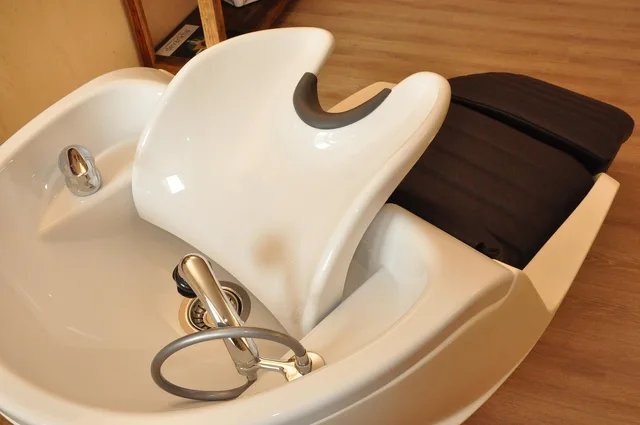
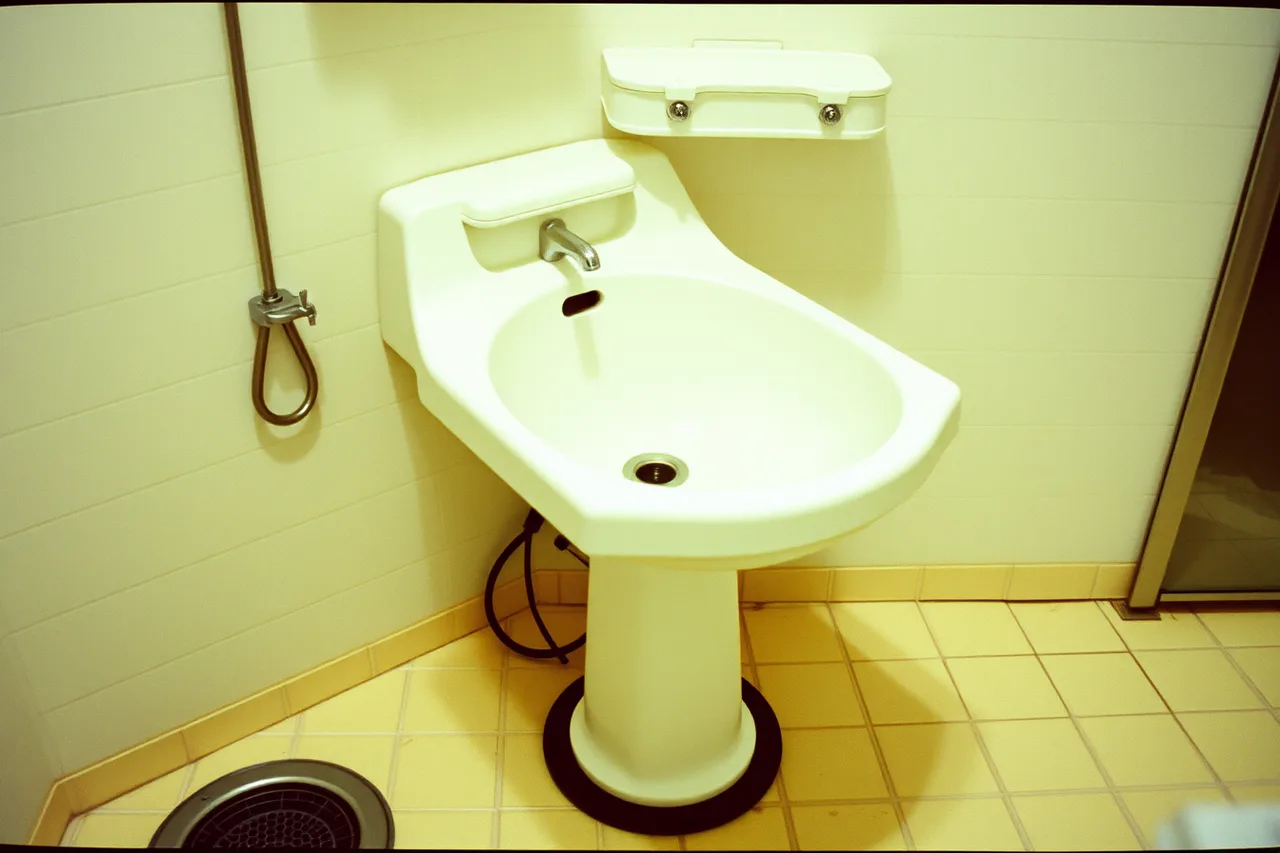
| Shampoo unit with tilting basin | Takara Belmont Rollerball, a bowl on a ball joint that tilts and swivels; Collins and Kaemark pedestal units; imported bowl-and-chair combos. Typically $250 imported, $700 to $2,500 domestic | Every color service and most cuts end at the bowl. It needs hot water at volume and a drain |
| Stylist chair and station | Kaemark, Gamma and Bross, and Maletti hydraulic pump chairs; mirror, shelf or trolley, and power at the station. Typically $200 to $1,500 per station | One per working stylist. A chair without clearance around it is storage, not capacity |
| Processing seating | Collins processing chairs, Minerva Beauty stools, or a fixed bar. Typically $150 to $800 per seat | Without it the client keeps the styling chair, and the overlap you planned never happens |
| Dispensary and back bar | A Collins or Kaemark back-bar sink with a lockable color cabinet. Supplies come from SalonCentric or CosmoProf, which sell professional lines only to licensed buyers | Keeps mixing off the styling floor and keeps products out of client reach |
| Ventilation at the dispensary | A ductless fume extractor such as a Sentry Air Systems unit, typically $1,000 to $3,000, or wall extraction tied into the HVAC | Mixing fumes should not travel across the floor |
| Wet and dry storage | Closed cabinets for towels, capes, foils and cleaning kit, sized to the towel count the day implies | Towel volume drives how many bowls you can run in a day |
| Reception desk and booking screen | Kaemark or Minerva Beauty desks; Fresha, Booksy, Square Appointments or Vagaro for the calendar, typically $0 to $30 a month per calendar plus card fees, and some charge commission on first-time clients | Rebooking at the desk is the cheapest marketing a salon has |
| Retail display | Kaemark or Minerva Beauty shelving at eye level near the desk. Typically $200 to $1,500 per unit | Retail attachment is a margin line, not decoration |
| Sanitation station | Barbicide concentrate, an EPA-registered disinfectant, in a lift-out jar, typically $25 to $60. Some state boards require autoclave sterilization, and a tabletop unit such as the Tuttnauer 1730 typically runs $1,500 to $3,500 | What is required, and who may perform which service, is set by your state board of cosmetology |
| Hood dryer | Pibbs 514 or a comparable dryer on a stand, typically $250 to $500 | Color and texture services need dry time that does not hold a styling chair |
| Apprentice or assistant trolley | A mobile trolley from Minerva Beauty or Kaemark, typically $100 to $400 | Lets a senior stylist stay on the productive part of the service |
Two items on that list are not furniture. Processing seating and the dispensary decide how many services a day the room can actually run.
Wash units decide the floor plan
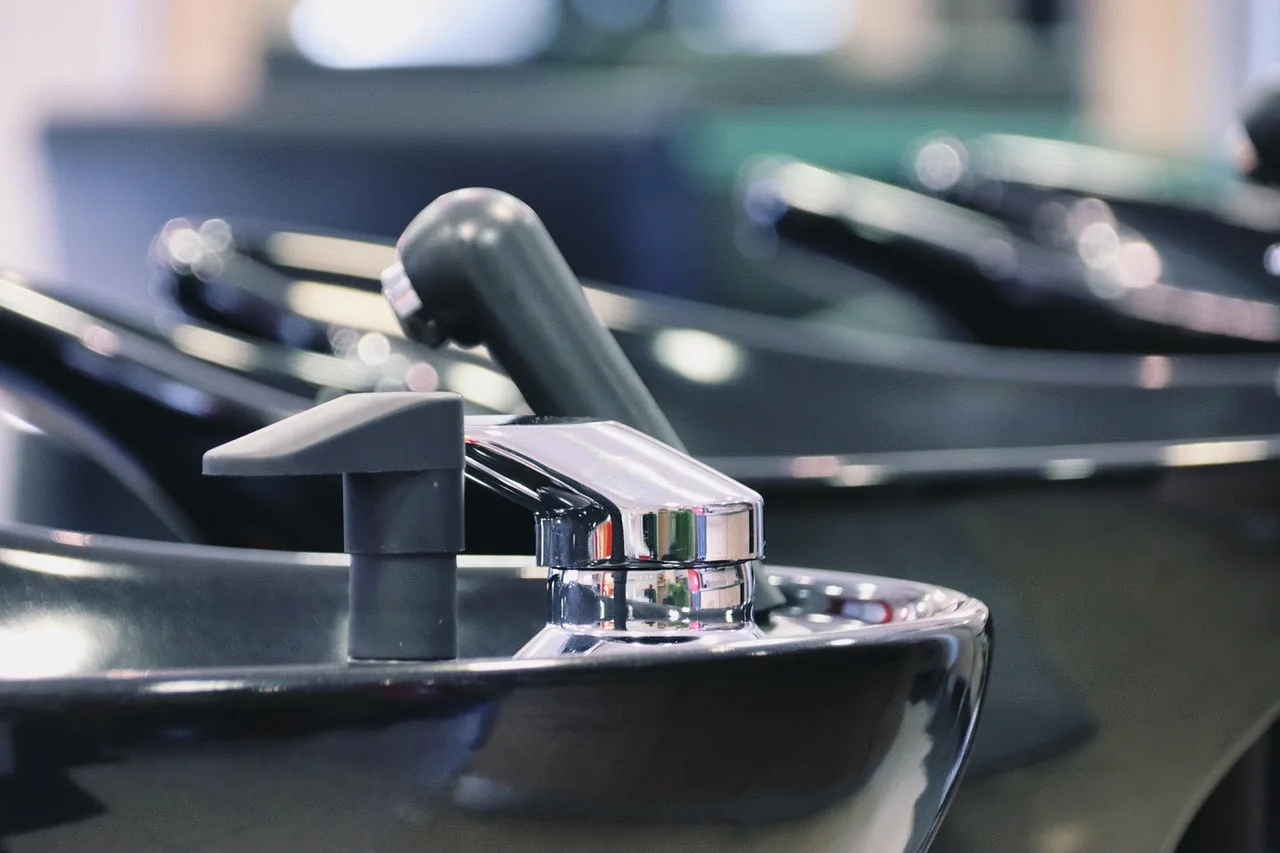
A shampoo unit is a plumbing decision. It needs a drain, hot water at volume and a position that does not send wet clients across the working floor. Adding one after the fit-out is a construction project, so the wet count is fixed when the layout is signed.
Rough-in plumbing for one bowl typically costs $800 to $2,500, depending on the distance to the stack. A concrete slab pushes that higher, because the line has to be cored or run overhead. The Takara Belmont Rollerball costs more than a pedestal bowl and takes less floor space behind the chair, since the basin swings to the client.
Work the capacity out in your own figures:
- wash cycles per hour = 60 / average minutes at the bowl
- wash capacity per hour = shampoo units x wash cycles per hour
Compare that with the services per hour your menu implies at peak. Where wash capacity is lower, the bowls become the queue and every chair waits behind them. The service mix drives the number, so settle the menu before the plumbing. The services and packages guide covers that side.
Processing seating is a scheduled resource
Where a service has a processing interval, the client has to sit somewhere that is not a styling chair. If that seat does not exist, the client keeps the chair, the chair is unavailable, and the overlap you counted on never appears.
Count processing seats and put that number into your booking rules as a cap on overlapping services. A salon with six stylists and one processing seat can overlap once at a time, whatever the roster says.
A $150 bar stool does the job as well as an $800 processing chair, as long as the stylist can still see the client.
The cheapest capacity most salons can buy is a properly placed processing seat, and it is the item most often cut from the fit-out budget.
The clearances you measure yourself
Manufacturers publish product dimensions. The working envelope around the product is yours to measure, and it decides how many stations the room holds.
- Clearance behind the chair, enough to work from behind and to pass while someone else is working.
- Clearance between stations, measured with two chairs occupied rather than empty. Four to five feet from chair center to chair center is the common working figure.
- Trolley position, so tools are reachable without leaving the client.
- Mirror and light placement, checked at the height where the work happens.
- Cable routing. Trailing power at a wet-adjacent station is a hazard and a liability question.
- Aisle width. The ADA standards set 36 inches as the minimum clear width for an accessible route, and the salon floor has to leave that path open.
Tape the layout onto the floor before ordering anything, then stand in it. That step is free and catches what no drawing shows.
Zones, and what each one has to hold
| Zone | The failure when it is undersized |
|---|---|
| Styling floor | Stylists collide, and durations stretch |
| Wet area | The bowls become the bottleneck for the whole room |
| Processing and waiting | Clients hold styling chairs through processing |
| Dispensary | Product handling spills onto the styling floor |
| Reception | Arrivals interrupt stylists, and rebooking is skipped |
| Staff and storage | Cleaning kit ends up in client space |
An undersized zone exports its problem to the styling floor, the only zone that earns. Sanitation requirements bear hardest on the wet area and the dispensary, and they come from your state board of cosmetology. Confirm them before the plumbing is designed, and record them as the licensing and compliance guide describes.
Where equipment stops being the answer
Equipment does not fix a duration model nobody measured, a roster that misses the hours clients want, or a menu with services nobody timed. Owners reach for equipment when the day runs late. The day usually runs late for scheduling reasons.
Equipment also does not change what the work requires. Chemical services follow the manufacturer's instructions for the product in use, after a documented consultation. Before a first color service, do a documented patch test.
A ventilated dispensary is good practice, not a substitute for either. Any client scalp or skin concern is a physician's matter.
Workplace safety obligations sit alongside all of this. See the Occupational Safety and Health Administration guidance on safety management.
Buying order, and what can wait
- Anything requiring constructionplumbing, electrical, ventilation. These are decisions, not purchases.
- Shampoo units such as the Takara Belmont Rollerball, because the plumbing fixes them.
- Styling chairs and stations from Kaemark, Gamma and Bross or Minerva Beauty, to the count the room supports.
- Processing seating, before it is quietly cut.
- Dispensary fittings, ventilation and storage.
- Reception and retail display.
- Anything that improves an existing chair rather than creating one.
The last group can wait. A second Pibbs dryer, a nicer trolley and better retail shelving improve a salon that is already trading; none adds a sellable hour.
Keep asset records from the start, as the Internal Revenue Service record keeping guidance describes.
The room sets the chair count, and the startup and market guide is where that count meets demand.
Common questions
How many shampoo units does a salon need?
Enough that wash capacity per hour exceeds the services per hour your menu implies at peak. Compute both from your own figures. A salon that gets this wrong finds out on its busiest Saturday, when adding a bowl is no longer possible.
Can chairs be added later?
Sometimes, if power and clearance allow. Shampoo units usually cannot. Be conservative about the wet count at design time; the chair count has more give.
What is most often left out of a first fit-out?
Processing seating, storage and dispensary ventilation, in that order. All three are invisible in a photograph and all three shape how the day runs.
What does a basic four-chair equipment package cost?
In most markets, furniture and fixtures for a four-chair salon typically total $10,000 to $35,000. That covers bowls, chairs, stations, processing seats, the dispensary, storage and reception.
Plumbing, electrical and ventilation work usually costs more than the furniture itself. Domestic furniture from Kaemark or Collins and imported furniture through a retailer such as Minerva Beauty land the package in different parts of that range.